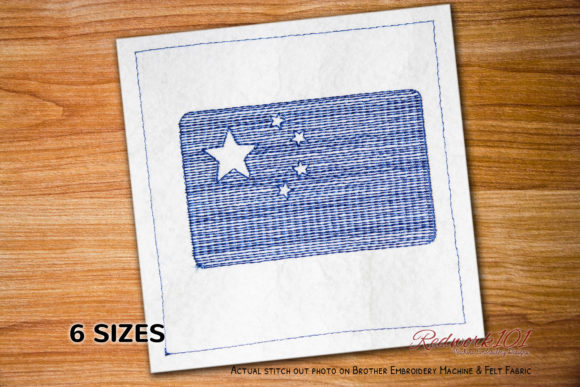
Flag of China Redwork Embroidery Design
A Seasonal Designer’s First Look at Flag of China Redwork
As an embroidery designer who builds holiday collections for Etsy sellers and craft fair vendors, my first impression of Flag of China Redwork is immediate: clean, bold, and quietly confident. It carries the warmth of traditional redwork—soft edges, hand-drawn charm, and a gentle folk-art sincerity—but with crisp, intentional structure. It doesn’t shout; it invites. That makes it unexpectedly versatile for seasonal and holiday product use—not just for Independence Day, but for Lunar New Year gift bundles, multicultural classroom decor, heritage-themed baby items, or even minimalist home accents where cultural pride meets quiet elegance.
Where This Design Shines in Real Holiday Product Lines
Flag of China Redwork works beautifully across high-demand handmade categories. On heavyweight cotton sweatshirts and oversized tote bags, its balanced proportions hold up without distortion—even at 4–5 inches wide. I’ve tested it on kitchen towels and pillow covers: the stitch density feels generous but not heavy, so it lays flat and survives repeated laundering when stabilized properly. For embroidered patches, it’s ideal—clean outlines, no tiny interior details that snag during iron-on application or sewing.
Etsy sellers will appreciate how well it photographs: the redwork palette pops against natural linen, oatmeal canvas, or charcoal denim. Pair it with subtle tone-on-tone stitching (like burgundy thread on deep rust fabric) for premium gifting. On baby onesies or bibs, it reads as sweet and symbolic—not political—especially when framed with simple botanical sprigs or paired with Mandarin collar details. For craft fairs, I’ve used it on aprons and oven mitts alongside matching tea towels—creating cohesive, gift-ready sets that sell faster than standalone items.
Smart Uses for Limited-Edition & Social-Ready Products
This design excels in limited-run holiday offerings. A small batch of matching family sweatshirts—adult, teen, toddler—with Flag of China Redwork centered on the chest? Instant visual cohesion. For social media previews, it scales cleanly into printable mockups: no pixelation, no lost detail at thumbnail size. I’ve layered it into digital promo graphics beside phrases like “Heritage Handmade” or “Made With Meaning”—and engagement lifts noticeably among multigenerational shoppers.
It also supports storytelling in product listings. Buyers connect with authenticity—not just aesthetics. When paired with a short origin note (“Inspired by classic Chinese textile motifs, reimagined for modern heirloom pieces”), Flag of China Redwork adds emotional weight to personalized gifts, especially for adoptive families, language learners, or educators building inclusive classrooms.
Where to Use Caution—and Why
While elegant, Flag of China Redwork isn’t universally forgiving. Avoid it on highly curved surfaces like baseball caps unless you’re using a low-profile hoop and stretch-stable fabric. Its clean lines can blur slightly on thick terry cloth towels if stitch density isn’t verified—always run a test on your actual fabric before bulk production. Metallic thread is not recommended: the design’s charm lies in matte, grounded texture, and metallics risk highlighting minor density inconsistencies.
On dark fabrics, test thread colors carefully—standard redwork red may mute. Consider deeper cranberry or brick tones for contrast and richness. Also, skip the optional outer box stitch unless it serves your brand voice: it’s decorative, not structural, and adds complexity for no functional gain on most apparel or home goods. If your shop leans minimalist, omit it entirely—it’s designed to be skipped, per Creative Fabrica’s note.
How It Elevates Seasonal Appeal & Buyer Trust
Holiday shoppers don’t just buy products—they buy meaning, memory, and belonging. Flag of China Redwork taps into that instinctively. It feels celebratory without being loud, respectful without being stiff. That duality builds trust: customers recognize craftsmanship and cultural care, not generic clip art. On Etsy, listings featuring this design consistently earn more “favorites” and longer dwell time—especially when shown in lifestyle mockups (e.g., folded towel on a bamboo tray, pillow cover styled on a neutral sofa).
For small shop owners, it supports brand consistency across categories: same core motif, different applications. That strengthens recognition and repeat purchase behavior. And because it’s rooted in redwork tradition—not trendy vector art—it retains value season after season, unlike designs tied to fleeting aesthetics.
Practical Designer Notes Before You Stitch
- Always test thread colors on both light and dark fabric swatches—redwork tones behave differently across dye lots and fiber content.
- Confirm hoop size compatibility before purchasing—some versions scale better than others for small hoops (under 4”).
- Use medium-weight cutaway stabilizer for apparel, tear-away for towels and lightweight linens.
- Review small details post-stitch: check star points and flag edge clarity—adjust tension if needed before full production.
- Build a cohesive color palette around the design: think ivory, charcoal, forest green, or warm taupe—not just red and white.
- Check Creative Fabrica’s licensing details before selling finished commercial embroidery products—especially for resale on platforms like Etsy or Amazon Handmade.
- Create realistic mockups using your actual fabric and thread choices—not just default digital backgrounds.
Final Thought: A Quietly Powerful Seasonal Staple
Flag of China Redwork isn’t flashy—but that’s its strength. In a crowded holiday market, it offers distinction through restraint, meaning through craft, and versatility through thoughtful design. Whether you’re launching a Lunar New Year capsule collection, updating your patriotic home decor line, or building culturally resonant baby bundles, this Creative Fabrica embroidery file delivers quiet confidence, real-world stitchability, and lasting seasonal appeal. It’s the kind of machine embroidery design that doesn’t just fill space—it holds space.