Three Wise Skeletons
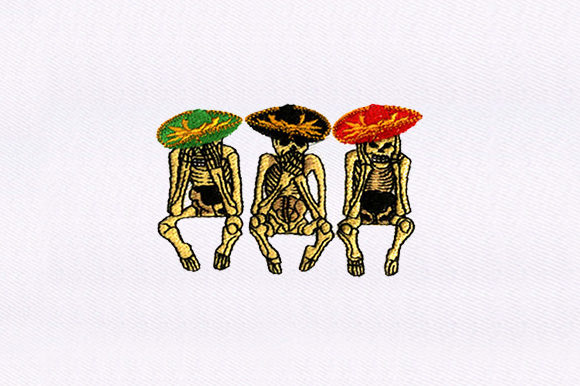
When I first opened the machine embroidery design file for Three Wise Skeletons, I will admit I braced myself for a novelty Halloween design. What I found instead was a thoughtfully composed piece of embroidery art that balances the cleverness of the see no evil, speak no evil, hear no evil motif with the bold visual language of calavera-style skeletons wearing Mexican sombreros. This is not just a seasonal curiosity. It is a design with genuine commercial potential for the craft business owner who knows how to position it. As someone who has tested hundreds of embroidery files for real client projects, I want to walk you through what this design actually demands in the hoop and what it can deliver for your handmade product line.
First Impressions and Visual Mood
The mood of Three Wise Skeletons lands somewhere between Dia de Muertos artistry and Halloween camp. It does not take itself too seriously, but it is executed with enough nuance that it avoids being a cheap novelty. The layout is horizontal, which makes it a natural fit for the back of a jacket, the front of a sweatshirt embroidery project, or the center panel of a tote bag design. The three figures are spaced well so that each skeleton reads clearly as an individual character while working together as a single composition.
The sombreros are the visual anchor. They give the design its personality and also provide a satisfying area of dense fill stitching that contrasts nicely with the more open, skeletal bodies. For an embroidery designer, this kind of contrast is a blessing. It means the design will hold its own on a variety of fabric textures without feeling flat or overworked. The satin stitch outlines around the bones are crisp and should translate well to finished products ranging from embroidered patches to custom apparel.
Real Project Walkthrough: The Premium Tote Bag
Let me give you a real case scenario. A client approached me to create a limited run of boutique tote bags for a fall market with a Day of the Dead theme. I pulled up the Three Wise Skeletons embroidery file and ran my standard test protocol. I hooped a piece of medium-weight black canvas, used a cutaway stabilizer, and selected thread colors that would pop: bright white for the bones, orange and magenta for the sombrero trim, and a deep gold for the hat bands.
The first thing I noticed during the test stitch was how well the fill stitch handled the hat shapes. The stitch density is present but not excessive, which means the design has structure without turning the fabric into a stiff board. The satin stitch on the rim of the sombreros laid down smoothly with no pulling or gaping. The underlay is doing its job. When the design finished, the three skeletons read clearly even from a few feet away. That kind of visual clarity is essential for a handmade product that needs to sell itself on a shelf at a craft fair or in an Etsy listing photo.
Where This Design Performs Best
Based on my testing, Three Wise Skeletons performs exceptionally well in the following applications:
- Custom Apparel: Sweatshirt embroidery, denim jackets, and T-shirts. The horizontal layout sits beautifully across the chest or upper back.
- Embroidered Patches: The design's crisp satin stitch edges make it a strong candidate for patch production. Use a heavy tearaway or water-soluble stabilizer for a clean patch finish.
- Tote Bags and Canvas Goods: As I mentioned, the stitch density holds up well on medium to heavyweight woven fabrics.
- Home Decor: Pillow covers and tea towels. It gives a kitchen or living space a festive, handmade touch that customers love for seasonal gifting.
- Holiday Gifts: This design is prime real estate for personalized holiday embroidery. It appeals to customers looking for something beyond standard Halloween motifs.
Where to Use Caution and Plan Ahead
No design is perfect for every situation, and Three Wise Skeletons has specific requirements that you need to respect if you want a professional finished product.
- Small Hoop Sizes: This is a wide design. If you are working with a 4x4 hoop, you will likely need to scale it down, which can compromise the detail in the sombreros and the spacing between the figures. A 5x7 or larger hoop size is the realistic starting point for decent results.
- Stretchy or Thin Fabric: The stitch density, while balanced, is significant enough that lightweight or highly stretchy knits may pucker without perfect stabilization. Use a fusible cutaway stabilizer if you are stitching on T-shirt jersey or baby apparel. Test first.
- Curved Surfaces Like Caps: The horizontal layout of the three figures can make cap embroidery tricky. It may work well on a flat-front snapback, but standard curved baseball caps might distort the outside figures. Hoop with care and consider a floating method.
- Dark Fabric: The skeleton bones rely on contrast. On very dark fabrics, make sure your white or ecru thread has good opacity. A heavier weight thread or a double layer of fill stitching may be necessary to prevent the fabric from showing through.
Practical Technical Notes for the Embroidery Business
If you are selling finished products or digital embroidery files, or if you are a small shop owner stitching this for customers, here are the technical details you need to verify before you commit to production.
- Check Stitch Density and Count: Review the design in your software. Look at the fill stitch density on the sombreros and the satin stitch width on the bones. If the density is too high for your intended fabric, you may need to adjust or choose a different design.
- Contrast Test in Black and White: Before you invest in thread colors, convert the design to grayscale in your digitizing software. This will show you exactly where the heavy stitching lands and whether the design will read well from a distance.
- Stabilizer Is Non-Negotiable: For woven fabrics like canvas or linen, use a medium cutaway. For knits, use a fusible cutaway. For patch production, use a water-soluble or heavy tearaway. The design deserves good support.
- Mockup for Etsy and Digital Sales: If you are selling the finished product or the design itself as a digital asset, create a high-quality printable mockup. Show the Three Wise Skeletons design on a realistic tote bag or sweatshirt. Buyers need to see the potential.
- Licensing and Commercial Use: Before you stitch this for clients or sell finished items, confirm the licensing terms of the embroidery file. Not all designs allow commercial sales of the finished product. If you are a digital product seller, verify that your license covers the redistribution of the embroidery file itself.
Commercial Viability and Customer Perception
From a business perspective, Three Wise Skeletons hits a sweet spot. The Halloween and Dia de Muertos themes are commercially strong from late September through November, but this design has enough artistic quality to feel like a boutique product rather than a generic seasonal item. Customers buying handmade gifts from Etsy sellers or at craft fairs are looking for design assets that show creativity and skill. This design delivers that.
The narrative of the three wise monkeys adapted to skeletons is instantly recognizable. It invites conversation. That kind of engagement is gold for a small shop product. It makes the item more memorable and more likely to be shared on social media. If you are an apparel decorator, this design is a strong candidate for a limited edition run. If you are a hobbyist making personalized gifts for friends and family, it will be a standout project that shows you invested in a quality machine embroidery design.
Final Practical Judgment
I recommend Three Wise Skeletons for any embroidery designer, small business owner, or creative entrepreneur who wants a reliable, visually engaging design for the fall season. It is not a design you can rush into a tiny hoop on a stretchy T-shirt without preparation, but if you give it the proper hoop size, a good stabilizer, and thoughtful thread color choices, it will reward you with a finished product that looks professional and sells well. For the Etsy seller or craft fair vendor, this is a design that can carry a product line. For the hobbyist, it is a fun weekend project that produces a high-quality handmade product you will be proud to give or keep. Just treat it with the technical respect it deserves, and it will perform.