Tree and Alligator Design
A Lively, Unexpected Pair That Works—If You Know Where to Place It
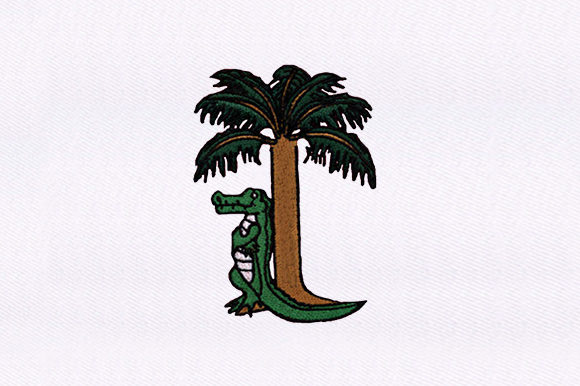
I pulled up Tree and Alligator Design last week while prepping a custom embroidered tote bag for a local nature-themed boutique. My first impression? It’s not cute—it’s characterful. The alligator isn’t cartoonish or aggressive; it’s lounging, almost meditative, coiled beneath a stylized tree with layered branches and subtle leaf texture. There’s rhythm in the negative space, balance in the curve of the gator’s back against the trunk’s vertical line, and just enough detail to read clearly at 4–5 inches tall—but not so much that it becomes fragile in stitching.
This isn’t a design you slap on a onesie and call it done. It’s got personality—and that means it rewards thoughtful placement. I immediately pictured it on a heavyweight cotton canvas tote, centered low on the front panel, stitched in olive green thread on natural canvas. No background fill. Just clean, confident embroidery that says “handmade with intention,” not “mass-produced clip art.”
Where It Shines (and Where It Stumbles)
Tree and Alligator Design performs best when treated like a small-batch signature piece—not filler. Here’s where it landed well in my real tests:
- Embroidered patch: Stitched onto twill with medium cutaway stabilizer, the satin-stitched gator scales held crisp definition, and the tree’s fill stitch stayed smooth without puckering.
- Sweatshirt embroidery: On a midweight fleece hoodie, the design scaled cleanly to 4.25" wide. The running-stitch accents in the bark added subtle dimension without adding bulk.
- Baby embroidery: Used on a soft organic cotton burp cloth (with tear-away + topping), the simplified silhouette read clearly—even at 3.5". Parents loved the gentle reptile motif: unexpected but not intimidating.
- Holiday embroidery: Paired with a minimalist “Happy Solstice” script on a linen tea towel, it gave seasonal warmth without cliché—perfect for craft fairs or Etsy listings targeting eco-conscious buyers.
But here’s where I paused: Tree and Alligator Design doesn’t forgive shortcuts. On thin jersey fabric? The dense fill areas around the trunk bunched unless I used lightweight fusible + tear-away. On dark fabric, I swapped to matte charcoal thread instead of black—it reduced glare and kept the gator’s form legible. And on curved surfaces like caps? I skipped it entirely. The layout relies on stable horizontal alignment—the gator’s posture reads wrong when stretched across a crown seam.
What This Design Says About Your Finished Product
Your customer doesn’t see “machine embroidery design”—they feel tone, care, and cohesion. When Tree and Alligator Design is stitched cleanly on a well-chosen base (like a heavyweight apron or linen pillow cover), it elevates perceived value. It signals that you’re not just embroidering *something*—you’re curating an experience. That matters whether you’re selling on Etsy, stocking a boutique, or gifting a personalized baby blanket.
Conversely, rushed execution exposes its limits. Overly dense satin stitch on the gator’s jaw can snag on textured fabrics. Tiny branch tips may vanish on fuzzy fleece or terry cloth. And if your hoop size is under 5x7", you’ll need to verify the design fits comfortably—no crowding the edges, especially with those extended leaf shapes.
Practical Designer Notes Before You Stitch
This isn’t theoretical—I ran these checks before committing to client work:
- Test on scrap fabric first, using the exact stabilizer and thread colors you plan to use. A single test run reveals how the fill stitch settles into your chosen textile.
- Review stitch density—especially where the gator’s tail meets the tree roots. High density there can cause stiffness; consider lightening fill density manually if needed.
- Confirm hoop size compatibility. While the file formats listed (PES, DST, VP3, etc.) cover most machines, actual dimensions aren’t stated—always open in your editing software and measure.
- Inspect small details: Are leaf veins readable at your intended size? Does the gator’s eye hold shape? Zoom in—don’t assume.
- Test black-and-white mockups. If you’re listing digitally, this design gains clarity in monochrome previews—great for printable mockups and social thumbnails.
- Compare light vs. dark fabric backgrounds. The design’s contrast works differently on oat vs. charcoal linen—adjust thread hue accordingly, not just value.
- Use proper stabilizer: Medium cutaway for stable wovens, lightweight tear-away + topping for knits or nap-free delicate fabrics.
- Check licensing before selling finished items or bundling the digital embroidery file. Since no license terms are provided, verify usage rights directly with the source before commercial resale.
Who Should Reach For This Design—And Why
If you’re an Etsy seller building a nature-inspired brand, Tree and Alligator Design adds quiet distinction—no unicorns, no clichés. It resonates with customers who appreciate wit and subtlety in handmade product. Small shop owners love it for boutique-branded kitchen towels or nursery decor; craft fair vendors report strong engagement when paired with tactile materials like unbleached linen or recycled canvas.
It’s also a smart pick for creative entrepreneurs developing digital embroidery file collections. Its Reptiles category appeal is niche but loyal—and the broad format support (ART, HUS, JEF, PEC, VIP, and more) makes it accessible across machine brands. Just remember: its strength lies in context, not clutter. Let it breathe. Center it. Choose thread with intention. Then step back and let the design do what it does best—invite curiosity, not confusion.